Followers

Friday, 20 July 2012

What kind of history do you like?


Agnes Sorel's tomb in the church of St Ours in Loches
The kind of history I like is that of those on the margins of society and I have a particualr fascination for Royal Mistresses, such as Agnes Sorel mentioned above. This woman, mistress of Charles VII of France is in fact a major ancestress of most royal houses of today through her three daughters by the king, Maris, Charlotte and Jeanne. Charlotte's son Louis de Brézé married Diane de Poitiers, another famous royal mistress, seen below.

Diane de Poitiers, wife of Louis de Brézé, grandson of Agnes Sorel, she was mistress to Henri II of France

Agnes Sorel was the model for this Virgin and Child surrounded by angels by Jean Fouquet 1450


Agnes was the first woman to carry the official title Royal Mistress and to be openly acknowledged as such. Charles VII built a tower, especially for her, seen here on the left of the picture in his chateau at Loches, which can still be seen today. 


Chateau de Loches

Agnes was poisoned with mercury at the age of 28 in 1450. Tests undertaken on her body in 2005 proved mercury poisoning but it cannot be definitively claimed that she was murdered as mercury was used in cosmetics or as a treatment for worms. it is a pity that she did not have coriander to hand, this may have saved her life. She was succeeded by her cousin Antoinette de Maignelais as  throughout history Royal Mistresses have come from a few families which have,  in succeeding generations fed the desires of subsequent rulers. 

Loches is a 40 minute drive from Opening Space Retreat and is well worth a visit for its chateau, its food and antique markets and its culture.


Thursday, 19 July 2012

What do you know about Salt lines?


France is covered with a network of salt lines, so called because of the way in which those towns that are on the lines have mineral salt spas close by. The Opening Space retreat, is a couple of kilometres away from one such place, that of Aize.


Aize is a small hamlet which is immaculately kept, witness this is in the state of the church. The settlement dates back to pre-Roman times and is perhaps a link to the Roman involvement in salt lines or navigation lines for 'Hal' Greek for Salt.

How does it feel to be in a different country?


We once had a visitor who, being afraid of flying, persuaded us to drive to Paris to pick him up from the Eurotunnel. This proved to be a very stressful job for us, but what was interesting was his response as we left Paris and drove the 200+ miles to the Opening Space Retreat.


He was struck by the similarities between Paris and London but the further south we ventured the more he was amazed at how different his environment was becoming. As he said " the roads got steadily smaller and quieter, the villages more and more apparently deserted until we turned into the small lane which leads to the retreat."


Then his conversion to our way of life and this different country he found himself in, was complete. "There are no streetlights" he said " I can see all the stars and the silence is deafening". He took a couple of days to settle into this way of life but after that he admitted that the struggle with a different environment was well worth it.


Wednesday, 18 July 2012

In what ways are sunflowers good for you?


The beauty of a field of sunflowers or Helianthus Annuus, which we at the Opening Space Retreat are surrounded by, sends my Solar Plexus Chakra into a whirl. This chakra is situated just below the base of the sternum or breast bone and governs our Joie de Vivre or Get up and Go. 


Also sunflowers have dietary and medicinal components including: Vitamin D, Phosphorous and Potassium. The seeds also contain essential Fatty Acids, Zinc, Iron, Calcium and a high level of B-Complex vitamins such as B5. Sunflowers are excellent bowel-toners, these seeds are often used in the treatment of irritable bowel syndrome and constipation. In our fight against radiation in our homes and our environments sunflowers are an invaluable weapon as they contain pectin which binds residues and clears the body of toxins.


In the oil taken from the seeds is Vitamin E which is useful in dermatological conditions. 

What do you know about Dulse Powder?


Dulse is a red seaweed harvested from the coast of Canada, Ireland and Norway. This seaweed grows on rocks, shells and even on larger brown seaweed. In several herbal medicine traditions Dulse was used to eliminate parasites, relieve constipation and as a treatment for scurvy. It contains large quantities of Iodine which is used in making thyroid hormones. These hormones affect weight and the rate that a person's body metabolises food. As with all food supplements use sparingly as an overdose of Iodine can lead to imbalances in the thyroid. If you have hyperthyroidism then avoid Dulse.


In addition, Dulse contains Vitamin's B12 and A and Iron. It is also an ingredient in the coriander pesto which featured in yesterday's blog which we at Opening Space Retreat will be making in the next few weeks for the use of our visitors.


Tuesday, 17 July 2012

What kind of books do you like?


This is our library at the Opening Space Retreat, a restful place between the kitchen and the living room. This is also where we give Reiki to our guests and where they can chill out or read. We have books from all sorts of genres including
New Age, Spiritual and Personal Development, Nature, History, Biography, Fantasy, Children, Comedy, Music, Theatre, Fashion to name but a few.


So before you arrive for your retreat think about the kind of books you like and we'll hopefully be able to satisfy your requirements.

Coriander. How many uses does it have?


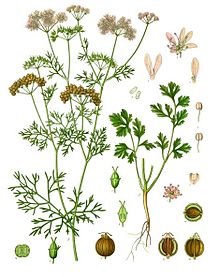
Here it is, one of the tastiest plants I know. Coriander, Coriandrum Sativum or Cilantro. It is a member of the Apiaceae family of annual herbs.


I have written about this mouth-watering plant before but some new information came to light today about the effect that eating coriander leaves can have on stripping the body of toxic metal deposits such as mercury which is found in tooth fillings.


The best way of course to rid yourself of this particular metal is to have such fillings removed. This though is not as easy as it may sound. The removal of mercury fillings must be done very carefully to avoid an overdose being transmitted to the body through mercury vapour, especially as dental work can be extremely invasive.

So back to coriander, it is recommended that you eat a handful of coriander once a day for ten days. Alternatively, you can make a Coriander pesto which you can eat a small amount of every day for three weeks. The recipe for this pesto is set out below, I for one who still has some mercury fillings will be trying this.

Ingredients
  • 1/3 cup Brazil nuts (selenium)
  • 1/3 cup sunflower seeds (cysteine)
  • 1/3 cup pumpkin seeds (zinc, magnesium)
  • 2 cups packed fresh coriander (cilantro, Chinese parsley) (vitamin A)
  • 2/3 cup flaxseed oil
  • 4 tablespoons lemon juice (vitamin C)
  • 2 tsp dulse powder
  • Sea salt to taste
Process the coriander and flaxseed oil in a blender until the coriander is chopped. Add the nuts and seeds, dulse and lemon juice and mix until the mixture is finely blended into a paste. Add a pinch of sea salt to taste and blend again. Store in dark glass jars if possible. It freezes well, so purchase coriander in season and fill enough jars to last through the year.